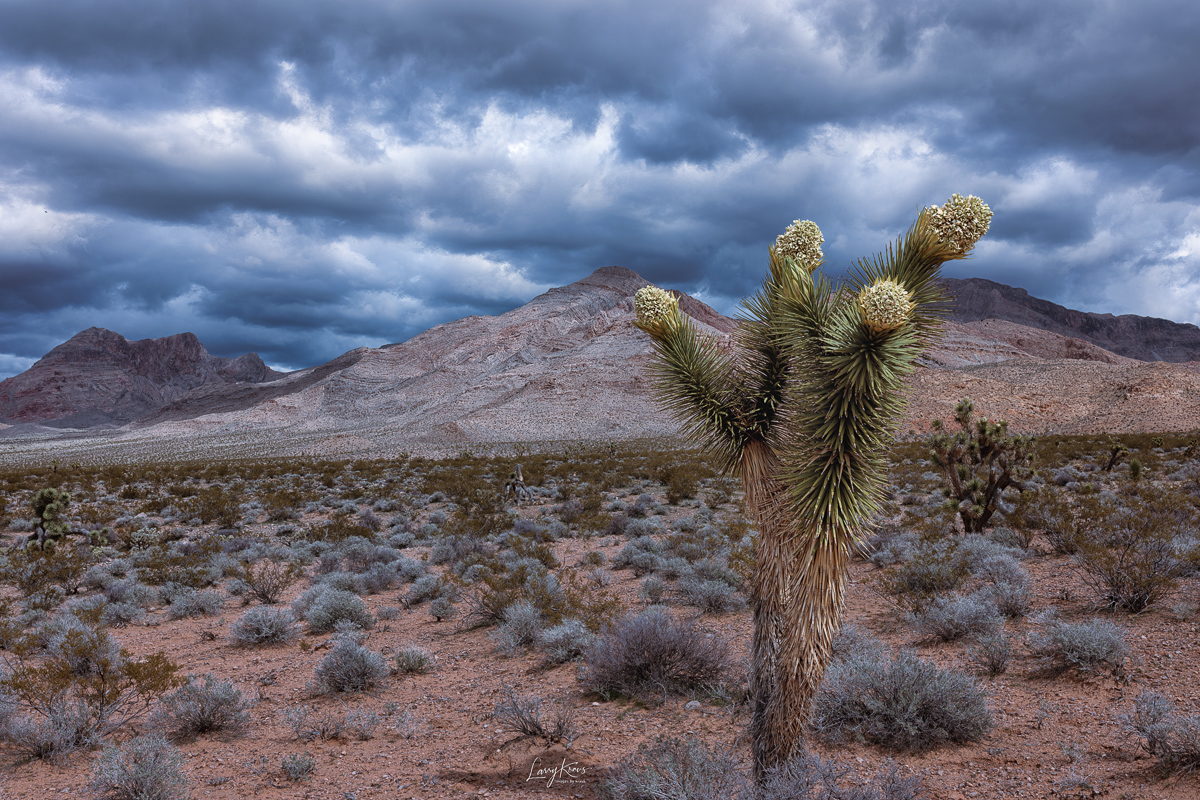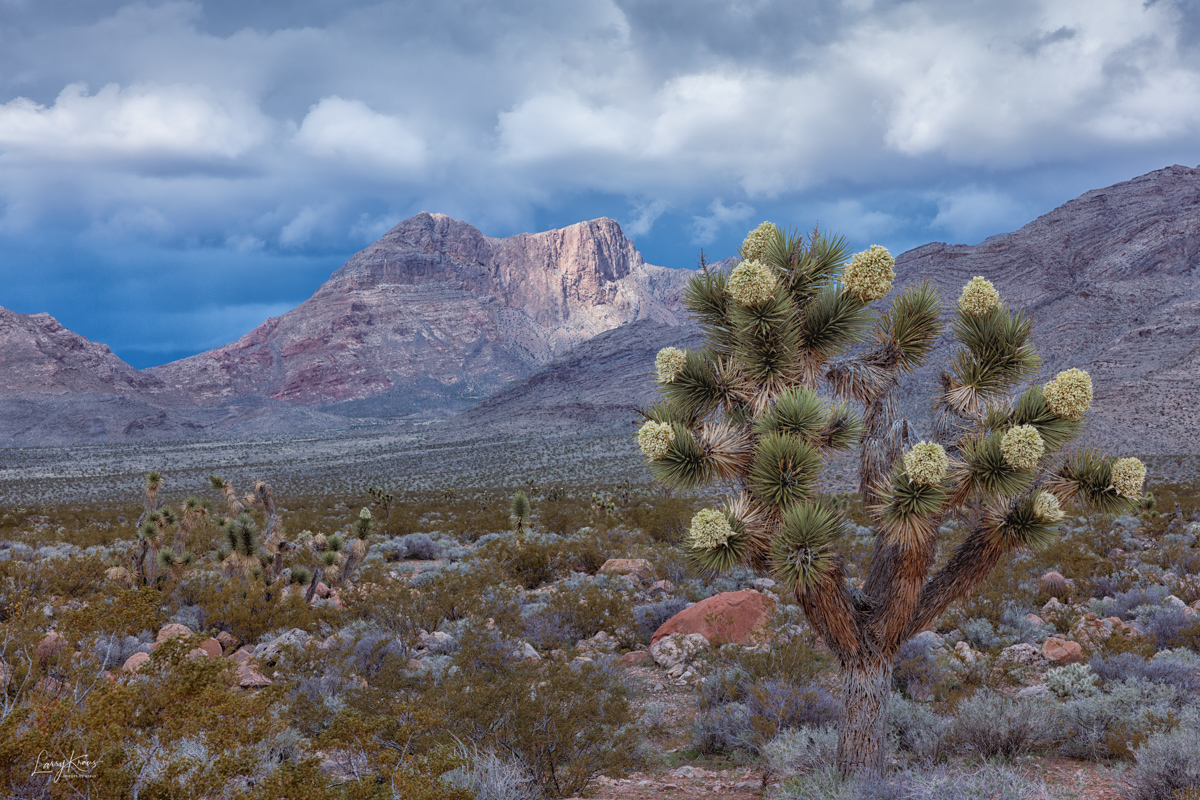
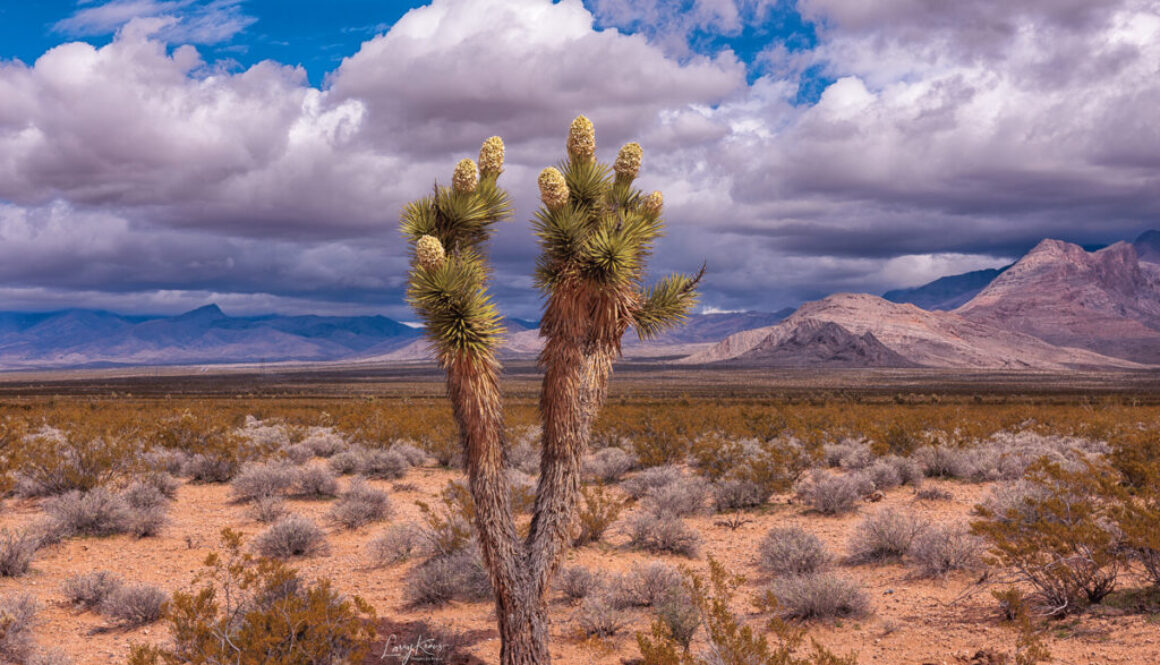
Joshua Blooming In The Mojave Desert
Joshua trees, known as “Yucca Brevifolia” are not actually trees, nor are they yucca. Actually, they’re a genus of the Agave plant. They range from the Mojave Deserts of California, Nevada, Utah and Arizona, and grow in elevations between 2000 and 6000 feet.
Mormon settlers gave the Joshua tree its name back in the mid 1800’s as they were traversing the Mojave Desert. They thought the trees looked like the biblical Joshua, with arms outstretched towards the promised land. The typical life span of a Joshua tree is about 150 years, but some live to as long as 500 years.
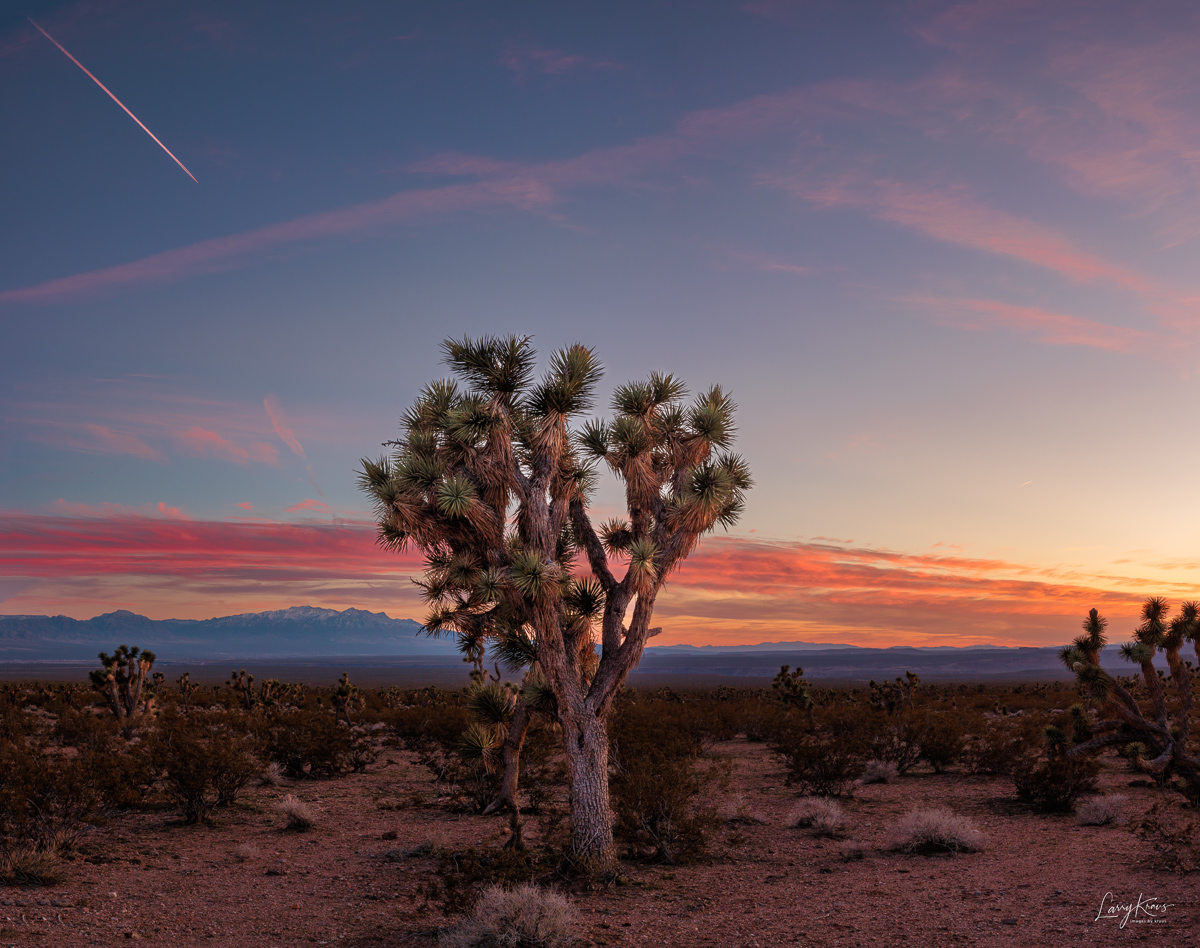
Joshua trees only bloom during the March-May period when fall and winter precipitation and spring temperatures combine to germinate them. They are not an annually blooming tree..
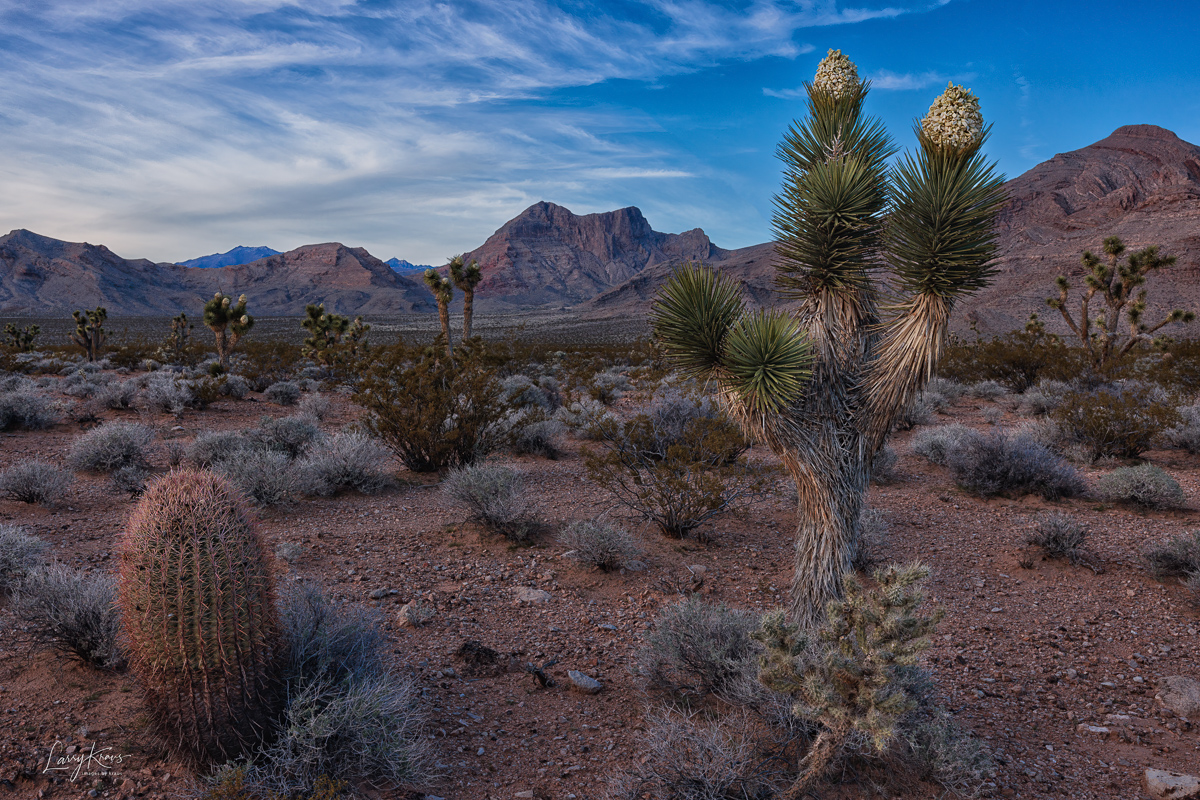
Joshua trees can take many different forms, as the photographs show, and can range from short, bushy plants, to tall and spindly looking trees. There’s no set growth pattern, but plants typically increase 2-3 inches in size each year.
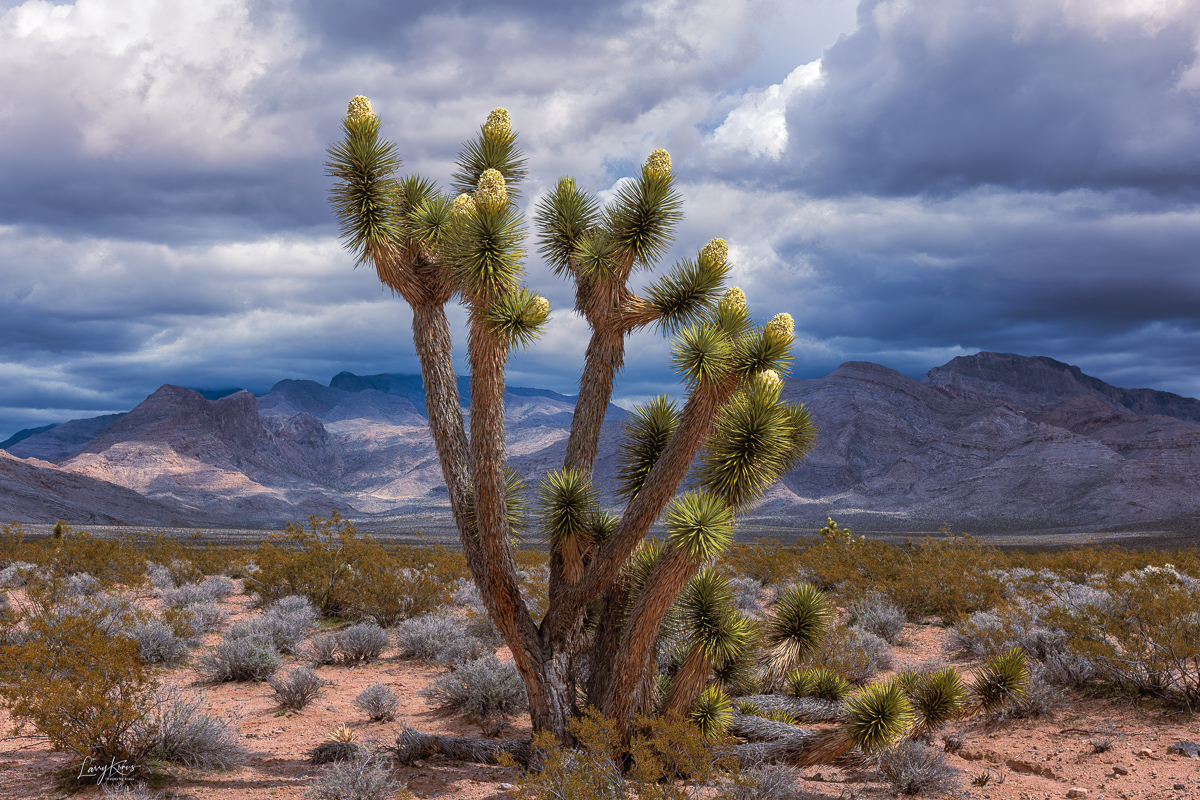
The creamy white blooms of the Joshua tree feed a variety of birds and insects before they quickly shed their blooms.